
You’ve built an innovative product, but how do potential B2B clients find you? While content marketing and paid campaigns play their parts, the foundation of long-term online visibility and organic lead generation lies in Technical SEO basics.
For SaaS companies, a strong Technical SEO strategy isn’t just a ‘nice-to-have’. Rather, it’s a fundamental driver of growth, directly impacting how search engines discover, understand, and rank your platform.
Many SaaS businesses, laser-focused on product development and feature updates, often miss the critical technical aspects that allow their marketing efforts to truly take off.
This complete guide is designed to change that. We, at Crawl Summit SEO, believe in breaking down the complexities of SaaS page SEO.
We’re here to provide “strategies you actually understand”. By empowering your founders, CTOs, marketing leaders, and technical teams, you can use the full power of Technical SEO for B2B success.
It isn’t about buzzwords or quick fixes. Instead, it’s about building a “future-ready SEO” foundation that fuels “meaningful and measurable results.”
This ultimate guide will walk you through the key pillars of Technical SEO for SaaS, offering deep insights and actionable strategies tailored to the unique challenges and opportunities within the B2B tech space.
Let’s learn “A New Language for Digital Growth” and transform your technical page SEO foundation into a powerful engine for customer acquisition.
Foundations: Why Technical Page SEO is Non-Negotiable for SaaS Success
Before diving into the “how”. It’s critically important to understand the “why.” What makes Technical SEO so essential for a SaaS business aiming for sustained B2B growth? It’s about ensuring your innovative platform is not just functional and user-friendly but also perfectly set up for search engine visibility and understanding.
Defining Technical SEO in the Context of SaaS Business Models
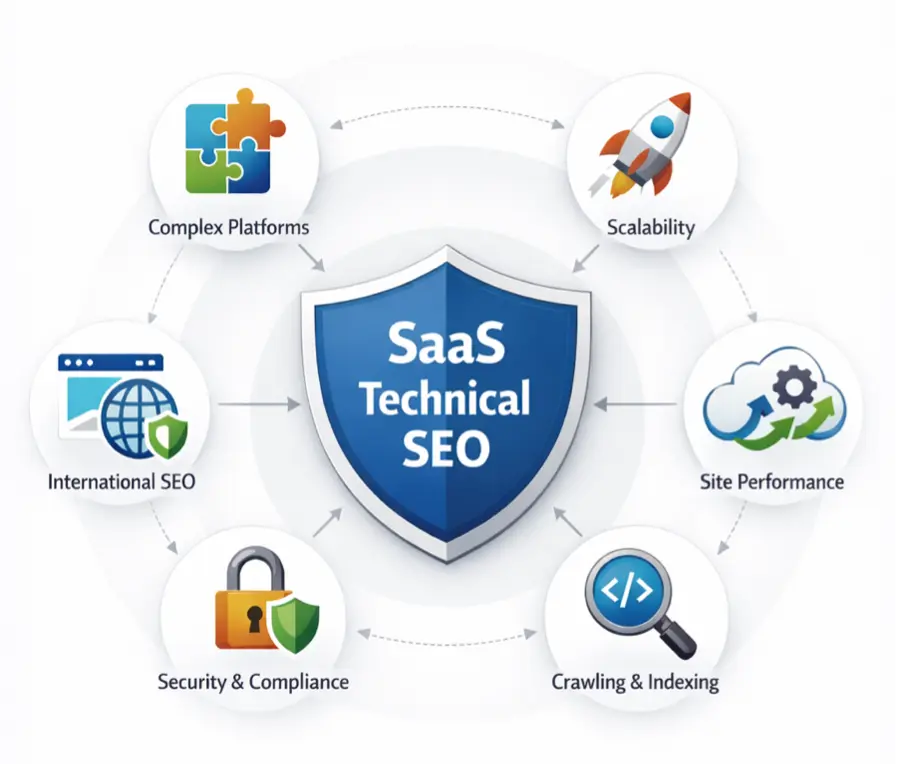
Technical page SEO refers to optimising your website and server setup to help search engine spiders crawl and index your site more effectively. For SaaS companies, this takes on specific details due to the nature of their products and business models:
- Complex Platforms: SaaS products often involve intricate user dashboards, dynamic content, and subscription-based access, all of which can present unique crawling and indexing challenges.
- Scalability: As your SaaS business grows, adding new features, resources, or international versions, your Technical SEO framework must be scalable to support this expansion without creating new issues.
- User Experience (UX): UX is vital for all websites. But, for SaaS, it’s deeply linked to customer retention and product adoption. Technical SEO fundamentals like site speed and mobile-friendliness directly impact UX.
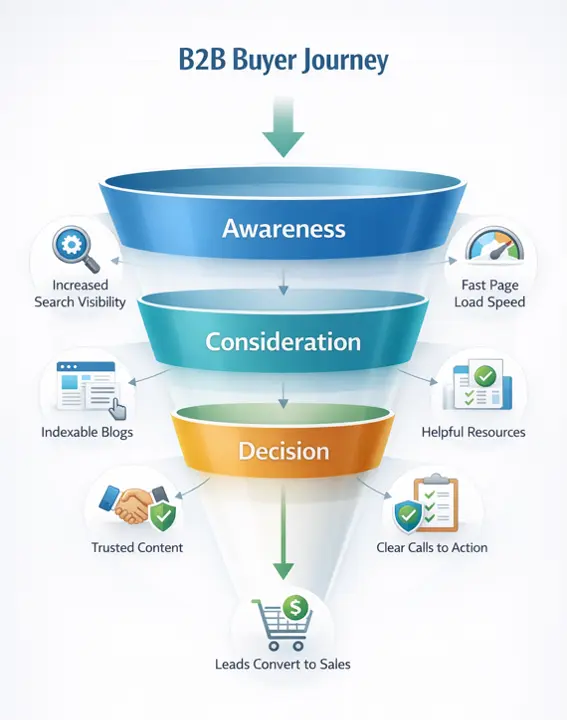
- B2B Buyer Journey: The B2B sales cycle is typically longer and involves multiple touchpoints. Technical SEO ensures your platform is visible at each stage, from awareness to consideration and decision, by optimising for relevant B2B buyer keywords and ensuring key product and solution pages are discoverable.
At Crawl Summit SEO, we specialise in translating these SaaS-specific technical SEO issues into clear, actionable strategies. We understand that effective technical SEO strategies include “speaking fluent tech and marketing” to bridge the gap between your development team and your growth objectives. Our mission is to “empower SaaS and tech companies to grow online through future-ready SEO, combining technical excellence, content clarity, and AI-first strategies.”
The Impact of Solid Technical SEO on B2B Lead Generation and Sales
A solid overall SEO strategy directly translates into real business outcomes for SaaS companies. It’s not just about rankings. Rather, it’s about “real, measurable results that drive long-term success.”
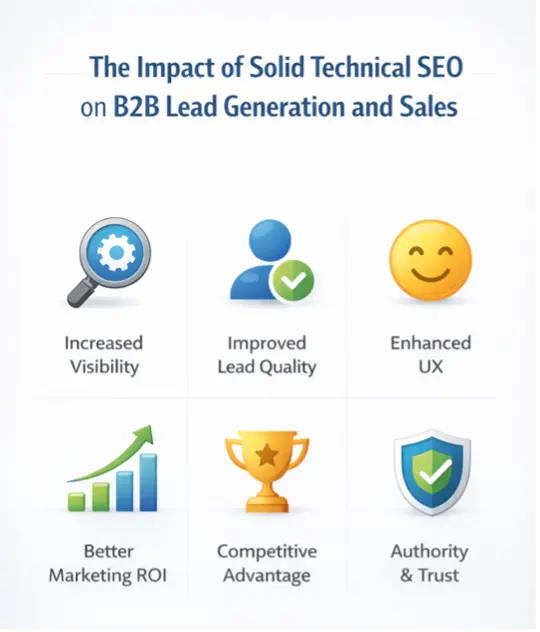
- Increased Organic Visibility: When search engines can efficiently crawl and index your website, your chances of ranking for relevant B2B keywords improve significantly. This means more qualified prospects discovering your SaaS solution.
- Improved Lead Quality: Technical SEO for B2B helps attract users actively searching for solutions your SaaS product offers. This targeted traffic often results in higher-quality leads with better conversion potential.
- Enhanced User Experience: Technical aspects like fast loading times, mobile responsiveness, and clear website architecture contribute to a positive user experience. A satisfied user is more likely to explore your offerings, request a demo, or sign up for a trial.
- Better Marketing ROI: By improving organic search performance, Technical SEO can reduce reliance on paid advertising over time, leading to a more sustainable and cost-effective customer acquisition strategy. We focus on “ROI and specific solutions,” ensuring your SaaS SEO investment delivers.
- Competitive Advantage: In a crowded SaaS market, a technically sound website can be a key differentiator. It signals professionalism, reliability, and attention to detail – qualities that resonate with B2B decision-makers.
- Authority and Trust: A website that functions flawlessly and is easily navigable builds trust with users and search engines alike. This aligns with our core value of “Trust,” building “strong and lasting relationships based on transparency and commitment.”
Ignoring Technical SEO is like building a state-of-the-art SaaS platform in an invisible building. No matter how brilliant your solution, if search engines can’t find and understand it, your growth potential will be severely held back.
Mastering Crawlability and Indexability for Your SaaS Platform
For your SaaS web page to rank, search engines first need to find (crawl) its pages and then add them to their vast database (index).
This sounds straightforward, but complex SaaS sites often present unique challenges. Mastering crawlability and indexability is the first technical hurdle to clear for SaaS SEO success.
Optimizing Robots.txt and XML Sitemaps for Complex SaaS Sites
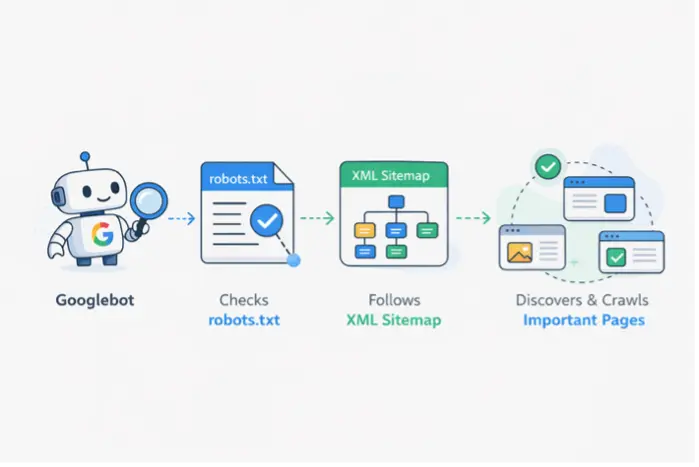
Robots.txt: Guiding the Crawlers
The robots.txt file is a simple text file at the root of your domain that tells search engine crawlers which pages or sections of your web page they should or shouldn’t crawl. For SaaS platforms, careful robots.txt management is vital:
- Prevent Crawling of Sensitive Areas: You’ll want to block crawlers from accessing internal dashboards, user-specific data, staging environments, or thank-you pages that could water down your SEO efforts if indexed. For example, you would include directives like Disallow: /admin/ to block access to administrative areas or Disallow: /cart/ for e-commerce functions not meant for public indexing.
- Avoid Wasting Crawl Budget: Search engines allocate a “crawl budget” to each site – the number of pages they will crawl within a certain timeframe. Blocking irrelevant or low-value pages ensures this budget is spent on your important public-facing content, like feature pages, pricing, and blog posts. For instance, if your platform generates dynamic URLs for user sessions that offer no unique public value, these patterns (e.g., /session/) should be disallowed.
- Sitemap Indication: It’s also best practice to specify the location of your XML sitemap(s) within the robots.txt file (e.g., Sitemap: https://www.your-saas-company.com/sitemap.xml) to help crawlers find it easily.
A well-configured robots.txt file, even though simple in its structure, requires careful thought for complex SaaS applications to guide search engine behaviour effectively.
XML Sitemaps: Your Site’s Roadmap
An XML sitemap is a file that lists all the important URLs on your website that you want search engines to discover and index. For SaaS platforms, especially those with many pages or dynamic content, sitemaps are very valuable:
- Comprehensive Coverage: Ensure all your key public-facing pages – including product features, solutions, pricing tiers, case studies, blog articles, and documentation – are included. Each URL entry in the sitemap ideally includes information such as its location (loc), the last modification date (lastmod), how frequently the page is likely to change (changefreq), and its priority relative to other URLs on the site (priority).
- Dynamic Content: If your SaaS site uses JavaScript to load significant content, ensure your sitemap includes the final, rendered URLs that search engines can access and index.
- Prioritisation Signals: While major search engines largely determine crawl priority themselves, tags within the sitemap like <priority> and <changefreq> can offer hints about the relative importance and update frequency of pages. For example, a key feature page might have a higher priority (e.g., 0.8) and a monthly change frequency, while a pricing page might have a very high priority (e.g., 0.9) and a quarterly change frequency if it’s updated less often.
- Multiple Sitemaps: For very large SaaS sites, you can create an XML sitemap index file that links to multiple individual sitemaps (e.g., one for product pages, one for blog posts, one for help documentation). This improves manageability.
Optimising these two elements is a foundational step in ensuring your SaaS SEO efforts aren’t hampered by basic discoverability issues.
Addressing Common Indexing Challenges in SaaS SEO (e.g., JavaScript, Faceted Navigation)
SaaS platforms often use modern web technologies and complex site structures that can accidentally create indexing hurdles. “Speaking fluent tech and marketing” is key here, as solutions often require collaboration between SEO specialists and development teams.
JavaScript-Heavy Applications:
Many SaaS platforms are built as Single Page Applications (SPAs) or heavily rely on JavaScript to render content and functionality. While Google has improved its ability to crawl and index JavaScript, challenges remain:
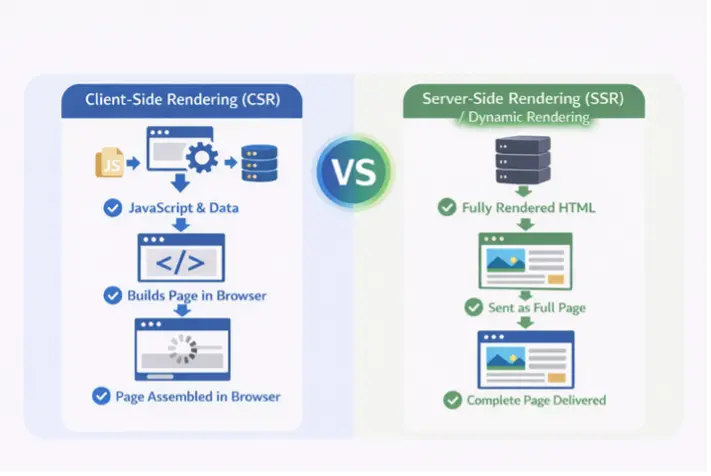
- Client-Side Rendering (CSR) vs. Server-Side Rendering (SSR) / Dynamic Rendering:
- CSR: The browser downloads a minimal HTML page and JavaScript, which then renders the content. This can sometimes lead to indexing delays or incomplete indexing if Googlebot struggles with the JavaScript.
- SSR: The server renders the full HTML page before sending it to the browser. This is generally the most SEO-friendly approach for critical content.
- Dynamic Rendering: This involves serving a server-rendered version to search engine bots and a client-rendered version to users. It can be a good compromise, but it requires careful setup.
- Solution: For critical SaaS landing pages, product pages, and marketing content, prioritise SSR or ensure your dynamic rendering setup is flawless. Use tools like Google’s Mobile-Friendly Test and URL Inspection tool in Google Search Console to see how Googlebot renders your pages. “At Crawl Summit SEO, we create custom, AI-optimised SEO frameworks built around how SaaS actually works.”
Faceted Navigation (Filters):
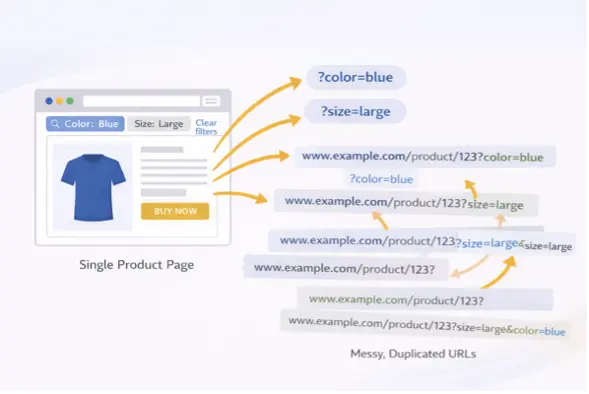
SaaS platforms, especially those with extensive documentation, feature lists, or integration directories, often use faceted navigation (e.g., filtering by category, price, or feature). If not handled correctly, this can lead to:
- Duplicate Content: Filters can generate numerous URLs with very similar content, differing only by a parameter (e.g., ?feature=X vs ?feature=Y).
- Crawl Budget Waste: Search engines might crawl countless combinations of filter URLs that offer little unique value.
- Dilution of Link Equity: If multiple filtered URLs get indexed, link signals can be spread thin.
- Solution:
- Canonical Tags: Use rel=”canonical” to point faceted canonical URLs to the main category page or a preferred version.
- robots.txt Disallow: Block crawling of specific parameter combinations if they offer no SEO value.
- nofollow Attributes: Selectively use nofollow on links to certain filter options.
- Google Search Console Parameter Handling (Use with caution): While this tool is largely deprecated for controlling crawling, it can offer insights.
- AJAX and JavaScript: Load filter results without changing the URL or use # (hash) based URLs that are typically not indexed for subsequent filter states, though modern approaches prefer history API usage with canonicals.
Content Behind Logins:
A significant portion of a SaaS platform (the actual application) is often behind a login. This content is generally not intended for public indexing.
- Clear Demarcation: Ensure that public-facing marketing pages are clearly separated and accessible, while the application itself is protected.
- Avoid Accidental Indexing: Use noindex tags on any user-specific pages that might unintentionally become crawlable.
By proactively addressing these common indexing challenges, SaaS companies can ensure their valuable content is seen by search engines and, consequently, by their target B2B audience. This dedication to “technical excellence” is a cornerstone of effective SaaS SEO.
Site Architecture and User Experience: Fundamental Pillars of SaaS SEO
Beyond just being crawlable and indexable, your SaaS website’s structure and the experience it offers users are key Technical SEO components. A logical site architecture helps search engines understand the hierarchy and relationship between your pages, while a positive user experience (UX) keeps visitors engaged and signals quality to search engines. These elements are deeply connected and vital for B2B SEO success.
Designing an SEO-Friendly URL Structure for Scalable SaaS Products
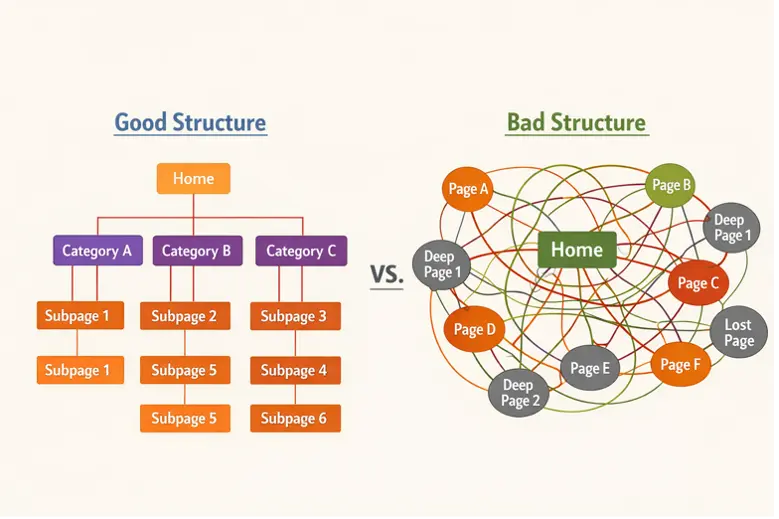
A well-thought-out site architecture is like a clear map for both users and search engines. For SaaS products that evolve and scale, this foundation is even more important.
- Logical Hierarchy: Organise your content in a clear, hierarchical manner. Start with broad categories (e.g., Features, Solutions, Pricing, Resources) and drill down into more specific subcategories and pages. For example, a URL like your-saas.com/solutions/for-enterprise is much clearer for both users and search engines than a generic URL like your-saas.com/page123?type=enterprise.
- Shallow Depth: Aim to keep your most important pages within 3-4 clicks from the homepage. A deep, convoluted structure can make it harder for crawlers to find content and for users to navigate.
- Consistent URL Structure: Use clean, descriptive, and keyword-relevant URLs. Maintain consistency in your URL patterns, such as always using hyphens to separate words and employing lowercase letters. A good example is your-saas.com/features/data-analytics-reporting, while your-saas.com/Features/data_Analytics-reporting_new should be avoided due to inconsistencies and less readable formatting.
- Internal Linking: Strategically link relevant pages together. This helps distribute link equity (ranking power) throughout your site and guides users and crawlers to related content. Your core product pages should be well-linked from relevant blog posts, case studies, and other supporting content.
- Breadcrumbs: Implement breadcrumb navigation, especially for larger SaaS sites with multiple levels. Breadcrumbs improve user orientation and provide search engines with another signal about your site structure. An example of a breadcrumb trail might be: Home > Solutions > For Small Businesses > Collaboration Tools.
- Scalability in Mind: As you add new features, integrations, or target new industries with your SaaS product, your site architecture should accommodate this growth logically without requiring a complete overhaul. This forward-thinking approach aligns with our value of “Innovation.”
A well-structured site is easier for search engines to understand, leading to better indexing of your key SaaS offering pages. It also makes your site “a clear, collaborative system” for users to navigate.
Core Web Vitals and Page Speed: Enhancing User Satisfaction and Rankings
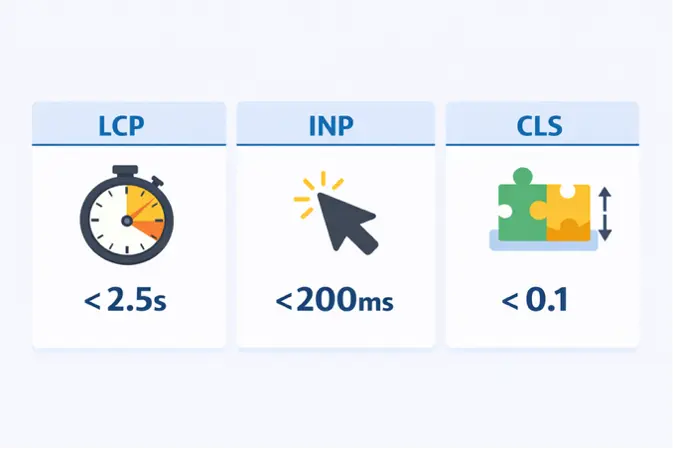
Page speed and overall user experience are no longer just ‘nice-to-haves’; they are direct ranking factors through Google’s Core Web Vitals (CWV). For SaaS companies, where user engagement and retention within the platform are key, providing a fast and seamless experience on your marketing site sets the right first impression.
Core Web Vitals (CWV) consist of three main metrics:
- Largest Contentful Paint (LCP): Measures loading performance. This is the time it takes for the main content of a page to load. For SaaS, this could be a hero image on a landing page or the primary text block explaining a feature. The goal is an LCP below 2.5 seconds.
- Interaction to Next Paint (INP): Measures overall responsiveness (replacing First Input Delay – FID). INP assesses the latency of all user interactions with a page, reporting a single value which, below 200 milliseconds, indicates good responsiveness.
- Cumulative Layout Shift (CLS): Measures visual stability. This quantifies how much page elements unexpectedly shift around during loading, which can be frustrating for users (e.g., trying to click a button that moves). The goal is a CLS score below 0.1.
Optimising for Page Speed and CWV for SaaS:
- Image Optimisation: Compress images without sacrificing quality. Use modern image formats like WebP.
- Server Response Time: Choose a reliable hosting provider. Optimise server-side code. For global SaaS products, consider a Content Delivery Network (CDN) to serve content from locations closer to your users.
- Browser Caching: Use browser caching to store static assets locally, so returning visitors experience faster load times.
- Minify Code: Minify HTML, CSS, and JavaScript files by removing unnecessary characters.
- Reduce Third-Party Scripts: Many SaaS sites use various third-party scripts for analytics, chat, marketing automation, etc. Each script adds to the load time. Audit these regularly and remove any that are not essential.
- Optimise JavaScript Execution: Defer non-critical JavaScript, use asynchronous loading, and remove unused JavaScript. This is particularly important for JavaScript-heavy SaaS marketing pages.
- Mobile Performance: With mobile-first indexing, performance on mobile devices is the top priority. Test extensively on various mobile devices and network conditions.
Improving Core Web Vitals is not just about pleasing search engines. Rather, it’s about providing “clarity” and a superior experience for your potential B2B customers, which directly impacts conversion rates and brand perception. At Crawl Summit SEO, we believe in a “transparent workflow” and “data-driven SEO that performs.”
The Comprehensive Technical SEO Audit: Your Roadmap to B2B SEO Excellence
Understanding the current technical health of your SaaS website is the first step towards achieving B2B SEO excellence. A comprehensive Technical SEO Audit acts as a diagnostic tool. By identifying weaknesses and uncovering opportunities, it can provide a clear roadmap for improvement. It’s about “stopping guessing and starting ranking.”
Key Components of a Thorough Technical SEO Audit for SaaS Companies
A Technical SEO Audit for a SaaS company needs to be detailed and cover a wide array of elements specific to SaaS platforms. It’s more than just a checklist; it’s an in-depth analysis.
- Crawlability & Indexability Review:
- Robots.txt analysis: Is it correctly configured? Is it blocking important content or allowing private areas to be crawled?
- XML Sitemap(s) validation: Are they error-free, submitted to search consoles, and comprehensive?
- Indexation status (Google Search Console site: queries): Are key pages indexed? Are there unintended indexed pages (e.g., duplicate content, parameter URLs)?
- Crawl errors: Identifying 404s, server errors (5xx), soft 404s.
- Handling of JavaScript rendering: How well are JS-heavy pages being crawled and indexed?
- Faceted navigation issues: Check for duplicate content and crawl budget waste.
- Site Architecture & Internal Linking:
- Logical structure and click depth: Is the site easy to navigate for users and crawlers?
- URL structure: Are URLs clean, consistent, and SEO-friendly?
- Internal linking patterns: Are important pages receiving sufficient internal link equity? Are there orphaned pages?
- Breadcrumb implementation.
- Broken internal and external links.
- On-Page Technical Elements:
- Title tags and meta descriptions: Optimisation, duplication, and truncation issues.
- Header tags (H1-H6): Proper usage and hierarchy.
- Canonical tags: Correct implementation to handle duplicate or similar content.
- hreflang tags (for international SaaS): Correct setup for language and regional targeting.
- Schema markup/Structured Data: Is it correctly implemented for SaaS offerings (e.g., for software applications, services, or organisations)?
- Site Speed & Core Web Vitals:
- Detailed performance analysis using tools like Google PageSpeed Insights and GTmetrix.
- Assessment of LCP, INP, and CLS scores for key landing pages.
- Identification of bottlenecks: Large images, render-blocking resources, slow server response times.
- Mobile performance analysis.
- Mobile-Friendliness:
- Mobile usability issues (Google Search Console).
- Responsive design check across various devices.
- Tap target sizes, viewport configuration.
- Security (HTTPS):
- Site-wide HTTPS implementation.
- Mixed content issues.
- Secure certificate validity.
- Duplicate Content Analysis:
- Identifying instances of duplicate or very similar content across the site.
- Checking for off-site duplication (scraped content).
- Log File Analysis (Advanced):
- Understanding how search engine bots actually crawl your site, identifying inefficiencies and crawl budget waste (covered in more detail later).
This isn’t exhaustive, but it covers the core areas. A good Technical SEO Audit doesn’t just list problems. Instead, it provides prioritised, actionable recommendations specific to the SaaS business context. It’s about creating an “SEO system SaaS teams actually understand.”
Technical SEO Tools and Techniques for an Effective Audit Process
Conducting a thorough Technical SEO Audit requires a combination of expertise and the right tools. “We prioritise data analysis and insights to make all strategic decisions.”
- Google Search Console: Essential for understanding how Google sees your site. Provides data on crawl errors, indexation status, mobile usability, Core Web Vitals, security issues, manual actions, and more.
- Google Analytics: While not strictly a technical SEO tool, it provides insights into user behaviour, traffic sources, and content performance, which can highlight areas needing technical improvement (e.g., high bounce rates on slow pages).
- Website Crawlers:
- Screaming Frog SEO Spider: A powerful desktop crawler that can identify broken links, audit redirects, analyse page titles and metadata, discover duplicate content, generate XML sitemaps, and much more. Key for any serious audit.
- Sitebulb: Another robust crawler offering detailed audit reports with prioritizations and explanations.
- Ahrefs / SEMrush Site Audit Tools: These comprehensive SEO platforms also include excellent site audit features that can crawl your site and flag technical issues.
- Page Speed Testing Tools:
- Google PageSpeed Insights: Analyses page content and offers suggestions to make pages faster, including CWV data.
- GTmetrix: Provides detailed performance reports, including timings, and tracks performance over time.
- WebPageTest: Allows for advanced testing from different locations and devices with various connection speeds.
- Browser Developer Tools: Built into Chrome, Firefox, etc., these are invaluable for inspecting HTML, CSS, JavaScript, network requests, and identifying on-the-fly issues.
- Mobile-Friendly Test (Google): Quickly checks if a page is mobile-friendly.
- Structured Data Testing Tool / Rich Results Test (Google): Validates your schema markup implementation.
- Log File Analysers: Tools like Screaming Frog Log File Analyser, ELK Stack (Elasticsearch, Logstash, Kibana), or Splunk can process server log files.
The process typically involves:
- Initial Briefing: Understanding the SaaS business, its goals, target audience, and known issues.
- Tool Setup & Configuration: Setting up crawlers correctly to mimic search engine behaviour (respecting robots.txt, user-agent settings).
- Data Collection: Running crawls, collecting data from Google Search Console, and other relevant tools.
- Analysis: Systematically going through each component of the audit, identifying issues, and understanding their root causes. This often involves “speaking fluent tech” to diagnose platform-specific problems.
- Prioritisation: Ranking issues based on their potential impact on SaaS SEO performance and the effort required to fix them.
- Reporting & Recommendations: Delivering a clear, comprehensive report that doesn’t just list problems but offers actionable, step-by-step solutions. The aim is to “make clear complex Technical SEO concepts for a SaaS audience.”
- Follow-up & Implementation Support: Working with the SaaS company’s technical and marketing teams to implement the recommendations.
A Technical SEO Audit is your foundational step to building a “transparent and trustworthy” online presence that drives “strategic and growth-oriented” results.
Essential On-Page Technical SEO Elements for SaaS Websites
While “on-page SEO” often brings to mind content optimisation and keywords, there’s a significant technical component to it as well. These technical on-page elements help search engines better understand the context, relevance, and structure of your SaaS website’s content, especially your critical product and solution pages.
Strategic Use of Schema Markup and Structured Data for SaaS Offerings
Schema markup (from Schema.org) is a vocabulary of tags (microdata) that you can add to your HTML to improve the way search engines read and represent your page in SERPs (Search Engine Results Pages).1 For SaaS companies, this is a powerful tool to explicitly define your offerings. This is typically put in place using JSON-LD format within a script tag in your page’s HTML.
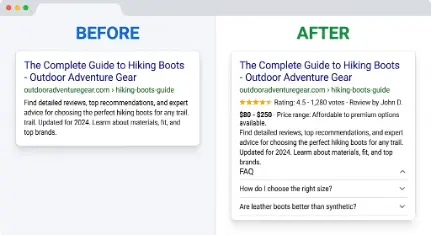
- SoftwareApplication Schema: This is highly relevant for SaaS. Within this schema type, you can specify details such as the name of your SaaS product, its application Category (e.g., “Business Application”), its operating System (often “WebBased” for SaaS), details about pricing plans using the offers property (which itself uses the Offer schema, specifying price and currency), and aggregateRating to display star ratings if you collect reviews. You might also include software Version, a download URL or installUrl that could point to a signup or demo request page.
- Service Schema: If you position parts of your SaaS as a service, or if you offer related professional services, this schema can define those.
- Organisation Schema: Reinforce your brand identity by clearly defining your company name, logo, contact information, and social profiles for search engines.
- Article or BlogPosting Schema: For your blog content, case studies, and whitepapers to enhance their appearance in SERPs, specify author, publication date, and headlines.
- FAQPage Schema: If you have FAQ sections on your product or pricing pages, marking them up can make them eligible for rich results in SERPs, directly answering user queries by displaying these Q&As.
- BreadcrumbList Schema: To get breadcrumb trails displayed in search results, reinforcing site structure and helping users understand their location on your site.
- VideoObject Schema: If you use videos to demonstrate your SaaS product features, this schema can help them appear as rich results in video searches.
Benefits for SaaS SEO:
- Enhanced SERP Appearance (Rich Results): Can lead to more eye-catching listings with ratings, pricing, FAQs, increasing click-through rates.
- Improved Context for Search Engines: Helps search engines understand precisely what your SaaS product is and does, leading to more relevant rankings.
- Competitive Edge: Many SaaS companies are still underutilising schema markup. Proper implementation can be a differentiator.
Implementing structured data should be “strategic and growth-oriented,” focusing on the elements that provide the most value for your specific SaaS offerings.
Optimising for Mobile-First Indexing: A SaaS Imperative
Google predominantly uses the mobile version of your content for indexing and ranking – this is mobile-first indexing. For SaaS companies targeting B2B clients (who may research on mobile even if they convert on desktop), this is non-negotiable.
- Responsive Design: Ensure your website adapts seamlessly to all screen sizes. The content and functionality available on your desktop site must also be available and fully usable on mobile.
- Identical Content: Critical content, including text, images (with alt text), and videos, must be the same on both mobile and desktop versions. Hidden content on mobile that’s visible on desktop can be problematic.
- Structured Data on Mobile: Ensure your schema markup is present and correct on the mobile version of your site.
- Meta Tags: Title tags, meta descriptions, and other meta tags should be consistent across mobile and desktop.
- Mobile Page Speed: As discussed with Core Web Vitals, mobile performance is critical. Test thoroughly.
- Easy Navigation: Mobile navigation (hamburger menus, clear calls-to-action) should be intuitive. Tap targets must be adequately sized.
- Avoid Intrusive Interstitials: Pop-ups that cover the main content on mobile can lead to a poor user experience and potential ranking issues.
Use Google’s Mobile-Friendly Test and the URL Inspection tool in Google Search Console to check how Googlebot sees and renders your mobile pages. A poor mobile experience not only impacts your SaaS SEO but can also significantly deter potential B2B leads who might be doing initial research on their phones.
International Technical SEO Considerations for Global SaaS Brands
Many SaaS companies have a global reach or ambition. If you’re targeting customers in different countries or languages, international Technical SEO becomes vital.
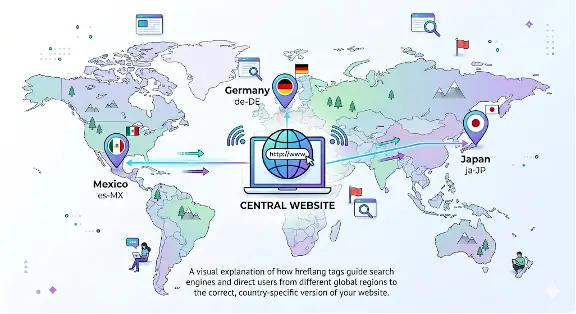
- hreflang Attribute: This HTML attribute tells Google which language and regional version of a page to show to users based on their language and location. Correct hreflang implementation is key to avoiding serving the wrong language version or creating duplicate content issues. It’s implemented by adding specific tags in the section of your HTML, within HTTP headers, or via an XML sitemap.
- Implementation Details: For instance, a page targeting English speakers in the US would use hreflang=”en-us”, while the equivalent page for Spanish speakers in Spain would use hreflang=”es-es”. It’s also important to include a self-referencing hreflang tag for the current page and an x-default tag pointing to a default page for users whose language/region doesn’t match any specified versions.
- Common hreflang Mistakes: Incorrect country or language codes, missing return tags (if page A links to page B with hreflang, page B must link back to page A), and pointing to non-canonical or blocked URLs are frequent errors.
- URL Structure for International Sites:
- ccTLDs (Country Code Top-Level Domains): e.g., your-saas.de for Germany. Strongest signal for geotargeting, but more complex to manage.
- Subdirectories with gTLDs: e.g., your-saas.com/de/ for Germany. Easier to manage, shares domain authority. Often, the recommended approach is for SaaS.
- Subdomains with gTLDs: e.g., de.your-saas.com. Can sometimes be seen as separate entities by search engines.
- Avoid using URL parameters (?lang=de) for international targeting as it’s a weaker signal and can lead to indexing issues.
- Geotargeting in Google Search Console: If using gTLDs (like .com) with subdirectories or subdomains, you can set international targeting preferences in Google Search Console (though hreflang is the primary signal).
- Server Location: While less of a direct ranking factor now, having servers (or CDN nodes) close to your target audience can improve site speed and user experience.
- Localised Content: Beyond just translation, truly localise your content, including currency, date formats, imagery, and cultural specifics. This extends to your keywords for SaaS SEO.
International Technical SEO ensures that your SaaS platform speaks the right language to the right audience, maximising your global growth potential. It’s about “combining technical excellence, content clarity, and AI-first strategies to drive meaningful and measurable results” on a global scale.
Your Go-To Technical SEO Checklist for Consistent SaaS Career Growth
Technical SEO isn’t a one-time fix. It’s an ongoing process of monitoring, maintenance, and adaptation. For SaaS companies, where platforms evolve rapidly with new features and updates, a proactive SEO Guide Checklist and integration into development workflows are key to consistent growth. This is where we “turn technical SEO into clear, collaborative growth, built for real results.”
Regular Maintenance: A Proactive Technical SEO Checklist
Establishing a routine for checking and maintaining your site’s technical health can prevent small issues from snowballing into major problems that impact your SaaS SEO and B2B SEO performance.
Weekly Checks:
- Google Search Console Monitoring:
- Review for new crawl errors (4xx, 5xx).
- Check for manual actions or security issues.
- Monitor index coverage status – any sudden drops or spikes in indexed pages?
- Spot-check Key Landing Pages: Are they loading correctly and quickly? Any visible layout shifts?
Monthly Checks:
- Core Web Vitals Performance: Track LCP, INP, CLS for key pages. Identify trends.
- Mobile Usability: Review Google Search Console reports for any new mobile usability issues.
- Broken Link Scan: Run a crawl (e.g., with Screaming Frog) to find and fix broken internal and external links.
- XML Sitemap Validation: Ensure your sitemap is up-to-date, error-free, and submitted.
- robots.txt Review: Check for any unintended changes, especially after site updates.
- Keyword Ranking Monitoring (for top B2B keywords): While not strictly technical, sudden drops can sometimes indicate underlying technical problems.
- Site Speed Tests: Run tests on key pages (homepage, core feature pages, pricing page) using tools like PageSpeed Insights or GTmetrix.
Quarterly Checks:
- Mini Technical SEO Audit: Conduct a scaled-down version of a full audit, focusing on critical areas:
- Crawlability and Indexability
- Site architecture (especially if new sections were added)
- On-page technical elements (canonical tags, hreflang if applicable)
- Content Audit for Technical Issues: Identify thin content pages that might be better consolidated or improved, or pages with technical barriers (e.g., slow-loading resource pages).
- Review Third-Party Scripts: Audit all third-party scripts (analytics, chat, ads). Are they all still necessary? Are they impacting performance?
- Security Check: Ensure SSL certificate is current, no mixed content issues.
Annually (or Bi-Annually):
- Comprehensive Technical SEO Audit: A full, deep-dive audit, especially if there have been major site redesigns, platform migrations, or significant changes in your SaaS product offerings.
- Log File Analysis (if significant changes or unexplained issues): To understand search bot behaviour in detail.
- Competitive Technical Analysis: How does your site’s technical performance stack up against key SaaS competitors?
This SEO Checklist provides a framework. The exact frequency and depth will depend on the size and complexity of your SaaS platform and the pace of development. The goal is to be proactive, aligning with our core value of “Growth” through “continuous learning and development to adapt to the ever-changing digital landscape.”
Integrating Technical SEO into Your Development Sprints and Product Updates
For SaaS companies, where the product and website are often closely connected and constantly evolving, Technical SEO tips must be part of the development lifecycle, not an afterthought. This is essential for preventing new SEO issues from being introduced with each update.
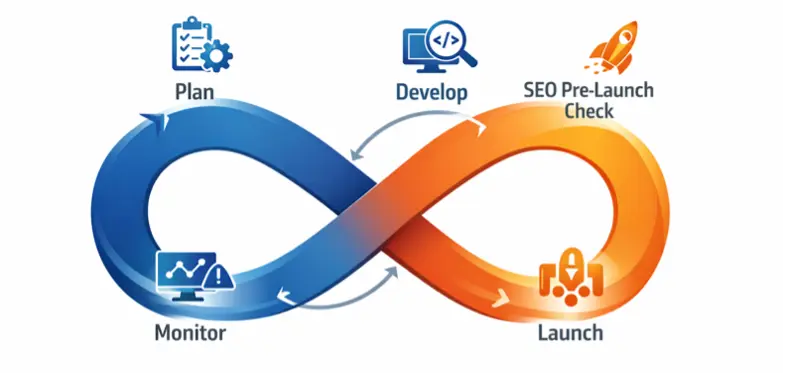
- SEO Representation in Sprint Planning:
- Have an SEO stakeholder (internal or agency partner like Crawl Summit SEO) involved in sprint planning meetings, especially when changes affect URLs, site structure, content rendering, or user experience.
- We can help “speak fluent tech and marketing” to articulate SEO requirements to developers.
- SEO Requirements in User Stories/Tickets:
- For any new feature, page, or site modification, include specific Technical SEO acceptance criteria.
- Examples: “New product feature page must have a unique, SEO-friendly URL,” “Ensure new dynamic content is server-side rendered or properly configured for dynamic rendering,” “Implement canonical tags for any new filterable results pages,” “Mobile version must pass Core Web Vitals.”
- Pre-Launch SEO Checks (Staging Environment):
- Before any significant update goes live, conduct SEO checks on a staging environment.
- Crawl the staging site to identify potential issues (broken links, incorrect noindex/nofollow directives, canonical problems).
- Test page speed and mobile-friendliness of new pages/features.
- Validate schema markup.
- Post-Launch Monitoring:
- Immediately after a launch, closely monitor Google Search Console for any new errors or indexing issues.
- Check that redirects (if any were implemented) are working correctly (301s, not 302s for permanent moves).
- Verify that analytics tracking is functioning as expected on new pages.
- Developer Education:
- Provide basic SEO training to your development team, explaining the “why” behind Technical SEO best practices. This fosters a collaborative approach. “Our mission is to provide services that foster clear and effective communication among all team members.”
- Documentation:
- Maintain documentation of your site’s SEO configurations, redirect maps, and any specific technical implementations related to SEO.
By embedding Technical SEO into your development sprints, you create a system where “technical excellence” becomes an inherent part of your SaaS platform’s evolution, ensuring that growth is supported, not hindered, by technical factors. This is how you “turn technical SEO into real growth, using AI-powered content and transparent strategies you actually understand.”
Advanced Technical SEO: Staying Ahead in the Competitive SaaS Market
Once you’ve mastered the fundamentals, advanced Technical SEO techniques can provide a significant competitive edge in the dynamic SaaS market.
These strategies delve deeper into data analysis and prepare your platform for the future of search. This aligns with Crawl Summit SEO’s emphasis on being “Dynamic & Innovative,” staying “ahead of the curve, using AI and the latest trends.”
Log File Analysis: Uncovering Hidden Insights for Your SaaS SEO Strategy
Server log files record every request made to your server, including those from search engine bots (Googlebot, Bingbot, etc.). Analysing these logs offers unfiltered insight into how search engines actually interact with your SaaS website.
What Log File Analysis Can Reveal:
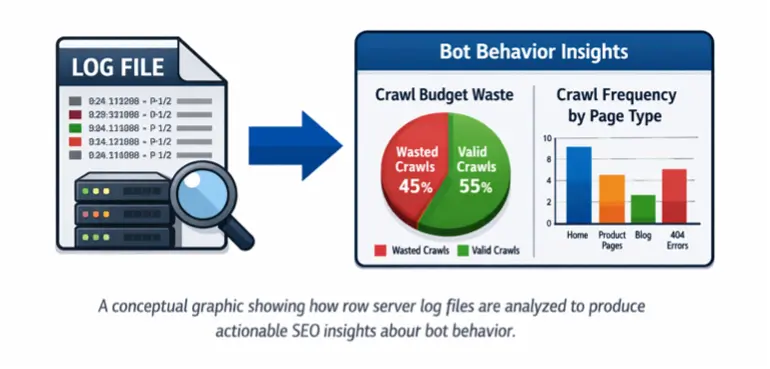
- Actual Crawl Frequency: How often are specific pages or sections of your site being crawled? Are important pages crawled frequently enough? Are unimportant pages crawled too often?
- Crawl Budget Waste: Are search bots spending significant time crawling non-essential URLs (e.g., error pages, redirected URLs, parameter-heavy URLs that should be blocked)? This is key for large SaaS sites.
- Discovery of Orphaned Pages: Identify pages that search bots are finding through means other than your internal links or sitemaps (perhaps old external links).
- Crawl Errors from Bot Perspective: See the exact HTTP status codes bots encounter (e.g., 404s, 5xx server errors), which might sometimes differ from what crawlers like Screaming Frog report.
- Crawl Behaviour by Bot Type: Differentiate between Googlebot Desktop, Googlebot Smartphone, Googlebot Images, etc.
- Identification of Slow-Loading Pages for Bots: Correlate crawl timestamps with server response times to find pages that are slow specifically for bots.
- Impact of Site Changes: See how changes (e.g., a new robots.txt directive, site migration) affect bot behaviour almost immediately.
Process for Log File Analysis:
- Access Log Files: Obtain raw server log files from your hosting provider or server administrator. You’ll typically need logs for at least a few weeks to identify patterns.
- Filter for Search Engine Bots: Filter the logs to include requests only from verified search engine bots (usually by IP address reverse DNS lookup and user agent).
- Use a Log File Analyser Tool:
- Screaming Frog Log File Analyser
- ELK Stack (Elasticsearch, Logstash, Kibana) for more custom, large-scale analysis.
- Various other commercial and open-source tools.
- Analyse the Data: Look for the insights listed above. For example, if Googlebot is frequently hitting 404 pages, investigate where it’s finding these broken links. If it’s spending too much time on faceted navigation URLs, reinforce your robots.txt or canonical strategy.
- Take Action: Use the findings to optimise crawlability, fix errors, and improve how efficiently search engines can access your important SaaS content.
Log file analysis provides a layer of “Analytics” and “Transparency” that goes beyond standard crawling tools, offering a direct view into bot behaviour to refine your Technical SEO for SaaS.
The Future of Technical SEO: AI, Machine Learning, and Voice Search Implications for SaaS
The SEO landscape is constantly evolving, driven by advancements in search engine algorithms, particularly AI and machine learning.
For forward-thinking SaaS companies, anticipating these changes is key. “We stay ahead of the curve, using AI and the latest trends to future-proof your strategy.”
AI and Machine Learning in Search:
- BERT, MUM, and Beyond: Google uses sophisticated AI models like BERT (Bidirectional Encoder Representations from Transformers) and MUM (Multitask Unified Model) to better understand the details of search queries and content.
- Impact on Technical SEO:
- Content Quality & Context: While not purely technical, AI emphasises the need for high-quality, contextually rich content. Technically, this means ensuring this content is easily accessible, structured logically, and supported by relevant schema markup.
- User Experience Signals: AI algorithms are likely to place even greater emphasis on user experience signals (Core Web Vitals, mobile-friendliness, dwell time, pogo-sticking). A technically sound, fast, and engaging site is vital.
- E-E-A-T (Experience, Expertise, Authoritativeness, Trustworthiness): Technical factors contribute to Trustworthiness (e.g., HTTPS, secure site) and can support Authoritativeness (e.g., a well-organised site with clear expert content).
- AI-First Strategies for SaaS SEO (Crawl Summit SEO approach):
- Using AI tools for content optimisation, keyword research, and even technical audit assistance, but always guided by human expertise.
- Ensuring AI-generated content (if used) is factually accurate, original, and meets E-E-A-T criteria, supported by a strong technical foundation.
Voice Search Optimisation for SaaS:
While perhaps more relevant for B2C, voice search is growing, and B2B users may use it for initial queries.
- Conversational Keywords: Optimise for longer, more natural-sounding phrases that people use when speaking.
- FAQ Content: Voice assistants often pull answers from well-structured FAQ pages. Using the FAQPage schema is beneficial.
- Local SEO (if applicable): For SaaS companies with local sales offices or services.
- Page Speed: Fast-loading pages are critical, as voice search results often prioritise quick answers.
- Featured Snippets: Much voice search content is sourced from featured snippets. Aiming for these (often through clear, concise answers to common questions) can help.
Other Future Considerations:
- IndexNow Protocol: A newer initiative by Microsoft Bing and Yandex (with others potentially joining) that allows websites to instantly notify search engines about new content, updates, or deletions, leading to faster indexing. This could become more widely adopted.
- Privacy Changes (e.g., cookieless future): While not directly Technical SEO, shifts in data privacy may impact analytics and tracking, requiring SaaS companies to adapt their measurement strategies, potentially with more reliance on server-side tracking.
- Sustainability (Eco-friendly SEO): Growing awareness of the carbon footprint of websites. Optimising for speed and efficiency (smaller images, cleaner code, efficient hosting) not only benefits SEO but also reduces environmental impact.
Staying “Dynamic & Innovative” in Technical SEO means not just fixing current issues but anticipating future trends and building a technically resilient and adaptable SaaS platform. It’s about “leading the evolution of SEO for SaaS and tech companies.”
Conclusion: Embedding Technical SEO into Your SaaS DNA for Sustainable B2B SEO Wins
Technical SEO for SaaS is not a side activity or a one-off project; it is a fundamental, ongoing commitment that should be woven into the very fabric of your company’s digital strategy.
In the highly competitive B2B SaaS landscape, where discoverability and user trust are so important, a technically sound website is the engine that drives sustainable organic growth, quality lead generation, and ultimately, increased sales.
As we’ve explored in this “Ultimate Guide,” from mastering crawlability and indexability to optimising site architecture, enhancing page speed, and using advanced techniques like log file analysis, every aspect of Technical SEO plays a critical role in how effectively your SaaS platform connects with its target audience.
It’s about creating “The SEO system SaaS teams actually understand,” one that is transparent, data-driven, and aligned with your growth objectives.
Key Takeaways: Building a Technically Sound Foundation for SaaS SEO
- Prioritise Discoverability: Ensure search engines can efficiently crawl and index your valuable public-facing content using well-optimised robots.txt and XML sitemaps. Address SaaS-specific challenges like JavaScript rendering and faceted navigation proactively.
- Structure for Success: Design a logical, scalable site architecture with clean URLs and strategic internal linking. This benefits both users and search engines.
- Speed and Experience are King: Focus on Core Web Vitals and overall page speed to enhance user satisfaction and meet Google’s ranking expectations. Mobile-first is not optional; it’s an imperative.
- Audit Regularly, Maintain Proactively: Conduct comprehensive Technical SEO Audits to identify issues and opportunities. Implement a regular SEO Checklist to maintain optimal technical health.
- Integrate with Development: Embed Technical SEO considerations into your development sprints and product update cycles to prevent issues and build SEO best practices into your platform from the ground up.
- Make the Most of On-Page Technicals: Use schema markup strategically to provide clear context to search engines about your SaaS offerings and enhance your SERP visibility.
- Think Global (If Applicable): Implement international Technical SEO best practices like hreflang if you’re targeting multiple countries or languages.
- Stay Ahead of the Curve: Understand the implications of AI, machine learning, and voice search for the future of SaaS SEO, and adapt your strategies accordingly.
The goal is not just to “do” Technical SEO, but to cultivate a culture where “technical excellence” is valued and pursued, where data from “Analytics” informs decisions, and where “Integrity” and “Trust” are built through transparent practices.
Partnering for Success: When to Seek Expert Technical SEO Help
While this guide provides a comprehensive overview, the finer points of Technical SEO for SaaS can be complex and time-consuming, especially for teams focused on product development and core business operations.
Knowing when to seek expert help is key.
Consider partnering with a specialised SaaS SEO agency like Crawl Summit SEO if:
- You lack in-house Technical SEO expertise.
- Your team is stretched thin and can’t dedicate sufficient resources to ongoing SEO efforts.
- You’re facing complex technical challenges (e.g., site migrations, persistent indexing issues, major performance bottlenecks).
- You want to ensure your Technical SEO strategy is aligned with the latest industry best practices and future trends, including AI-first approaches.
- You need an objective, expert perspective to conduct thorough audits and develop a clear roadmap for growth.
- You’re looking for a partner who “speaks fluent tech and marketing” and can provide “strategies you actually understand.”
At Crawl Summit SEO, “we empower SaaS and tech companies to grow online through future-ready SEO, combining technical excellence, content clarity, and AI-first strategies to drive meaningful and measurable results.”
We turn complex SEO into a clear, collaborative system built for SaaS and tech teams.
Investing in Technical SEO is investing in the long-term visibility, credibility, and growth of your SaaS business.
By building and maintaining a technically sound online presence, you’re not just optimising for search engines; you’re optimising for sustainable B2B SEO success.
Ready for Technical SEO that actually fits your SaaS business and drives real growth? Let’s build a smarter strategy, together.